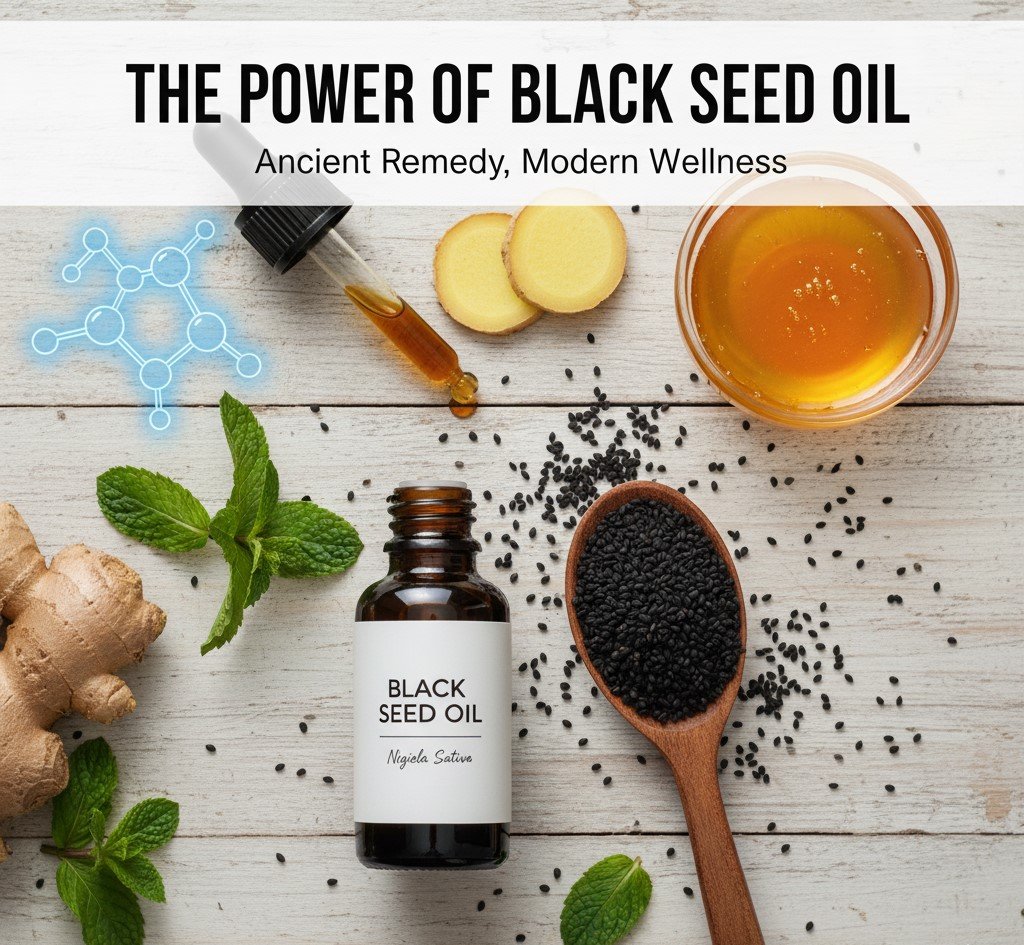
What Is Black Seed Oil Good For? The Ancient Remedy Making a Modern Comeback
Black seed oil is good for reducing inflammation, fighting acne, supporting weight loss, stabilizing blood sugar, and potentially helping with conditions like psoriasis, asthma, and hair loss. This herbal extract from Nigella sativa seeds contains powerful compounds like thymoquinone that give it antimicrobial, antioxidant, and anti-inflammatory properties backed by preliminary research.
TL;DR: Your Quick Guide to Black Seed Oil Benefits
Black seed oil comes from the tiny black seeds of Nigella sativa, a flowering plant used in traditional medicine for thousands of years. Research suggests it may help with skin conditions like acne and psoriasis, support hair growth, reduce inflammation throughout your body, aid weight loss, and improve blood sugar control. While studies show promise, most research is still preliminary, and you should talk with a healthcare professional before adding it to your routine. But here’s what makes this oil truly fascinating: it might be one of the few natural remedies that works on multiple body systems at once—and the science is just starting to catch up with what ancient healers already knew.
Where Does Black Seed Oil Actually Come From?
Black seed oil is extracted from the seeds of Nigella sativa, a flowering plant native to hot regions like Eastern Europe, Northern Africa, and Southwestern Asia. You might also hear these seeds called black cumin, black caraway, or simply nigella—they’re all the same thing.
Traditional medicine practitioners have relied on these tiny black seeds for thousands of years, long before modern science could explain why they worked. Today, researchers are discovering that the seeds’ high concentration of antioxidants and bioactive compounds—especially a powerful substance called thymoquinone—gives black seed oil its therapeutic potential.
What’s particularly interesting is how this ancient ingredient is now showing up in everything from supplements to skincare products. But does it actually live up to the hype? Let’s look at what the research reveals.
Can Black Seed Oil Clear Your Skin?
Yes, black seed oil may significantly reduce acne severity thanks to its antimicrobial and anti-inflammatory properties. If you’ve struggled with stubborn breakouts, this might be worth your attention.
A 2020 study found something remarkable: participants who applied a topical gel containing black seed extract twice daily for 60 days experienced a 78% reduction in acne severity. Even more impressive, researchers noted a significant improvement in the actual number of acne lesions compared to people in a control group who didn’t use the treatment.
The reason black seed oil works for acne comes down to its ability to fight bacteria on your skin while simultaneously calming inflammation—essentially attacking the problem from two angles at once. This dual-action approach makes it different from many conventional acne treatments that only address one factor.
But skin benefits don’t stop at acne. There’s another common skin condition where black seed oil shows real promise.
Does Black Seed Oil Help With Psoriasis?
Research suggests black seed oil could reduce psoriasis symptoms and improve skin lesions, especially when you combine oral and topical applications. For anyone dealing with the frustration of psoriasis, this offers a potential natural option worth exploring.
Animal studies have demonstrated that black seed oil can reduce skin inflammation and other psoriasis symptoms. A 2017 review took this further, finding that using both oral and topical forms of black seed extract together reduces psoriasis symptoms more effectively than either method alone.
The anti-inflammatory properties of Nigella sativa extract appear to be the key factor here. Psoriasis is fundamentally an inflammatory condition where your immune system mistakenly attacks healthy skin cells, so anything that calms this overactive response could theoretically help.
However—and this is important—most of this research has been conducted on animals or in small human studies. We need larger, more comprehensive human trials to fully understand how well black seed oil works for psoriasis and what the optimal dosage might be.
Speaking of skin healing, there’s another benefit that might surprise you.
Can Black Seed Oil Speed Up Wound Healing?
Yes, when applied directly to skin, black seed oil may stimulate tissue growth and accelerate wound healing through its key compound, thymoquinone. This is where the oil’s multiple properties work together in a particularly elegant way.
Animal studies have found that thymoquinone helps treat burns, excisions, and various wound types through a triple-threat mechanism: anti-inflammatory effects reduce swelling, antioxidant properties protect healing tissue from damage, and antibacterial action prevents infection. On top of that, the oil appears to increase collagen production—the protein your body uses to rebuild skin—while providing moisturizing effects that create an optimal healing environment.
Think of it as giving your skin exactly what it needs to repair itself more efficiently. While we’re still waiting for extensive human trials, the animal research is compelling enough that some people are already incorporating black seed oil into their wound care routines under medical supervision.
But what about the hair on your head? That’s where things get even more interesting.
Will Black Seed Oil Actually Grow Your Hair?
Black seed oil may support hair growth and reduce hair loss, particularly for people with telogen effluvium, a common form of temporary hair loss. If you’ve noticed your hair thinning, this might offer genuine hope.
A 2020 review highlighted a small but significant study where participants used a Nigella sativa extract lotion daily for three months. The results? Significant increases in both hair density and thickness among people suffering from telogen effluvium.
The same review examined a study with 90 participants testing different seed oils for hair loss. Black seed oil came out on top as the most effective option for reducing hair loss. That’s why you’ll find it increasingly added to hair care products like masks and shampoos.
The antimicrobial and antioxidant properties that help your skin also appear to benefit your scalp, creating healthier conditions for hair follicles to thrive. While we need more research to understand exactly how it works and who benefits most, the preliminary evidence is encouraging.
Now let’s shift from what you can see in the mirror to what’s happening inside your body—because that’s where black seed oil might be doing its most important work.
How Does Black Seed Oil Fight Inflammation Throughout Your Body?
Black seed oil has powerful anti-inflammatory properties that work systemically, potentially reducing your risk of chronic conditions like type 2 diabetes, heart disease, and cancer. This might be the oil’s most significant benefit, even though it’s less visible than clearer skin or thicker hair.
Studies have demonstrated that black seed oil doesn’t just reduce inflammation in one area—it works throughout your entire body, addressing what researchers call “systemic inflammation.” This matters because chronic inflammation is now recognized as a contributing factor in the development of many serious diseases.
Think of inflammation like a fire alarm in your body. Sometimes it needs to go off (like when you’re fighting an infection), but when it’s constantly blaring, it causes damage to healthy tissues. Black seed oil appears to help turn down that alarm when it’s unnecessarily loud.
This anti-inflammatory effect extends to specific conditions too, including one that affects millions of people worldwide.
Can Black Seed Oil Help You Breathe Better If You Have Asthma?
Research suggests black seed oil may improve lung function and reduce asthma attacks through its anti-inflammatory effects. For asthma sufferers, this could mean fewer symptoms and better breathing.
A 2020 review found a small study showing that inhaling boiled black seed extract had a bronchodilatory effect on people with asthma—meaning it helped open up their airways. The study participants showed improvements in all markers of lung function and respiratory rate, essentially helping them breathe more easily.
A 2021 meta-analysis of four randomized controlled studies reinforced these findings, concluding that black seed supplements may help manage asthma specifically because of the seed’s anti-inflammatory properties. When inflammation in your airways decreases, breathing naturally becomes easier.
However, it’s crucial to emphasize that more clinical data is needed before black seed oil can be recommended as a primary asthma treatment. If you have asthma, never stop your prescribed medications without consulting your healthcare provider—but you might discuss whether adding black seed oil could complement your existing treatment plan.
There’s another visible skin condition where black seed oil shows promise, one that’s particularly challenging to treat.
Does Black Seed Oil Work for Vitiligo?
Some research suggests black seed oil could improve pigmentation in people with vitiligo, a condition that causes loss of skin color. This benefit stems from a completely different mechanism than the anti-inflammatory effects we’ve discussed.
A 2019 study of 33 people with vitiligo found that applying a cream made with black seed oil twice daily for six months improved pigmentation in the hands, face, and genital region. These are often the most distressing areas for people with vitiligo since they’re highly visible or sensitive.
Researchers believe black seed oil’s benefits for vitiligo come from its ability to spread melanin within the skin. Melanin is the natural pigment that gives your skin, hair, and eyes their color. By helping distribute melanin more evenly, black seed oil may reduce the appearance of depigmented patches.
That said, this is still an emerging area of research, and we need larger studies to confirm these effects and understand who’s most likely to benefit. But for people with vitiligo who have limited treatment options, even preliminary evidence can be valuable to discuss with a dermatologist.
Now let’s talk about something that affects far more people: weight management.
Can Black Seed Oil Actually Help You Lose Weight?
Yes, black seed oil may support weight loss by reducing appetite and decreasing body fat, though long-term studies are limited. If you’re trying to shed pounds, this might be a helpful addition to your efforts—but it’s not a magic solution.
A 2021 study of 45 women with overweight or obesity showed impressive results: taking 2,000 mg of black seed oil daily for eight weeks decreased appetite and reduced body mass index, body weight, waist circumference, and body fat. Those are exactly the metrics most people care about when trying to lose weight.
The mechanism isn’t fully understood yet, but researchers suspect it involves both appetite suppression and metabolic effects. When you feel less hungry, you naturally eat less. And if the oil also helps your body process nutrients more efficiently, that’s a double benefit.
However—and this is important—few studies have examined the long-term use of black seed oil for weight loss. Taking any supplement in large quantities for extended periods requires caution, and we simply don’t have enough data yet about the safety of long-term, high-dose use.
Weight loss connects directly to another critical health marker: blood sugar control.
Will Black Seed Oil Help Stabilize Your Blood Sugar?
Research shows black seed oil could be beneficial for stabilizing blood sugar levels, improving both fasting glucose and post-meal blood sugar. For people with diabetes or prediabetes, this could be genuinely life-changing.
A 2019 review found that black seed may improve multiple markers related to blood sugar control, including insulin levels and blood sugar levels both during fasting and after eating. This suggests the oil helps your body process glucose more effectively throughout the day, not just at specific times.
Better blood sugar control has cascading benefits: it reduces your risk of diabetes complications, helps with weight management, improves energy levels, and protects your cardiovascular system. It’s one of those foundational health markers that affects almost everything else in your body.
If you’re already taking diabetes medications, definitely talk with your healthcare provider before adding black seed oil, as it could potentially enhance the effects of your medications and require dosage adjustments.
This blood sugar benefit is actually part of a larger pattern of metabolic improvements.
Could Black Seed Oil Reduce Your Risk of Metabolic Syndrome?
Research suggests black seed oil could help reduce the risk of metabolic syndrome by improving blood pressure, cholesterol levels, and blood sugar. This is huge because metabolic syndrome dramatically increases your chances of developing heart disease, stroke, and type 2 diabetes.
A 2021 study involved 55 participants with high blood pressure. Half took 2.5 mL of black seed oil twice daily for eight weeks, while the others took sunflower oil as a control. By the end of the study, most participants who took black seed oil experienced reductions in:
- Diastolic blood pressure (the bottom number)
- Total cholesterol
- LDL cholesterol (the “bad” kind)
- Fasting blood sugar levels
That’s a comprehensive improvement across multiple risk factors, all from one supplement. It’s like getting multiple medications’ benefits from a single natural source.
However, it’s essential to remember that supplements alone won’t prevent metabolic syndrome. A well-rounded, whole-food diet and an active lifestyle remain your best prevention methods. Black seed oil should be viewed as a potential complement to healthy habits, not a replacement for them.
Now that we’ve covered what black seed oil can do, let’s talk about the practical aspects of actually using it.
How Much Black Seed Oil Should You Take?
The appropriate dosage of black seed oil varies widely depending on what you’re using it for, ranging from 0.7 grams to 5 mL daily in various studies. There’s no one-size-fits-all answer, which is why working with a healthcare professional is so important.
Here’s what research has used for different purposes:
- For blood sugar management: Studies have used daily doses ranging from 0.7 g to 5 mL
- For weight loss: One study found 2,000 mg daily effective
- For reducing blood lipids: Research used 2.5 mL twice daily for eight weeks
Black seed oil comes in several forms—oral supplements (capsules or liquid), topical lotions, shampoos, and skin creams. The form and dosage you choose should match your specific health goals.
Before using any form of black seed oil, speak with a healthcare professional to determine the right amount for you and to avoid potential allergic reactions or interactions with medications you’re taking.
Speaking of safety, there are some important limitations and warnings you need to know.
What You Need to Know About Black Seed Oil Safety
Black seed oil is likely safe when consumed in small amounts for less than three months, but we don’t have enough data on long-term or high-dose use. This is the reality with many herbal supplements—short-term safety is established, but long-term effects remain unclear.
The Food and Drug Administration doesn’t regulate supplements the same way it regulates medications. This means quality, purity, and dosages can vary significantly between brands. When buying black seed oil supplements, look for third-party verification from companies like NSF International or USP to ensure you’re getting a product from a reputable source.
Certain people should be particularly cautious or avoid black seed oil altogether:
- If you’re pregnant: Always consult your healthcare provider before taking any supplements during pregnancy
- If you have functional dyspepsia, liver disease, or kidney disease: Consider limiting your intake
- If you take prescription medications: Black seed oil may interact with other supplements and drugs
The key takeaway? Black seed oil shows real promise for multiple health conditions, but it’s not risk-free, and it’s not appropriate for everyone. Treating it with the same respect you’d give any therapeutic substance is the smartest approach.
The Bottom Line: Should You Try Black Seed Oil?
Black seed oil may be a promising natural remedy for conditions like vitiligo, hair loss, psoriasis, metabolic syndrome, and asthma. The research also supports its potential benefits for inflammatory conditions, weight management, blood sugar control, and skin health.
What makes black seed oil particularly interesting is its multi-system effects—it’s not just good for one thing, but appears to support health across multiple body systems through its anti-inflammatory, antimicrobial, and antioxidant properties.
However, it’s crucial to maintain realistic expectations. Most research is still preliminary, with small studies and limited long-term data. Black seed oil isn’t a cure-all, and it works best as part of a comprehensive approach to health that includes proper nutrition, exercise, and medical care.
Before adding black seed oil to your routine, have a conversation with your healthcare provider, especially if you take prescription medications or have existing health conditions. They can help you determine whether it’s appropriate for your situation, recommend the right dosage, and monitor for any potential interactions or side effects.
For many people, black seed oil represents an evidence-based natural option worth exploring—just approach it with informed caution rather than blind enthusiasm.
Will black seed oil kill parasites in my body?
While black seed oil has antimicrobial properties, there isn’t sufficient scientific evidence to confirm it effectively kills parasites in humans.
How long does it take to see results from black seed oil?
Generally, you should give any supplement at least 6-8 weeks before evaluating its effectiveness, but always under healthcare supervision.
Generally, you should give any supplement at least 6-8 weeks before evaluating its effectiveness, but always under healthcare supervision.
It’s generally safer to dilute it with a carrier oil (like coconut or jojoba oil) before applying to skin, especially if you have sensitive skin. Pure essential oils can sometimes cause irritation or allergic reactions